
PETER STAUDE CHIEF EXECUTIVE OFFICER
The Group, like many South African entities, was a diversified industrial business with interests in aluminium, building materials, consumer foods, cotton, edible oils, industrial and commercial catering, mushrooms, sugar and agricultural land development, starch and glucose, textiles and transport. Since the early nineties
the Group has systematically divested from a number of these businesses and refocused its operations, leveraging the synergies that exist between its agri-processing operations and prime agricultural land holdings. Capitalising on the investments in its operations and a solid platform of earnings growth, a strategic review of the Group’s operations saw the announcement in 2006 of the proposed unbundling and listing of Hulett Aluminium to create two separately listed, focused companies in 2007:
This will be achieved by the listing of Hulamin on the JSE followed immediately by the unbundling by Tongaat-Hulett to its shareholders of its Hulamin shares. The unbundling and listing should unlock value for shareholders and will provide investors with a unique investment opportunity in a focused aluminium semi-fabricator company. The transactions will enhance Tongaat-Hulett’s value proposition as an agri-processing business. The capital structures of both businesses will be optimised, including facilitating broad based BEE equity participation, returning capital of R500 million to Tongaat-Hulett shareholders by way of a share buyback and retaining the balance sheet capacity to take advantage of attractive growth opportunities.
The Tongaat-Hulett Group regards transformation as fundamental to the long term development and sustainability of the South African economy and its businesses. The Group has a proud history of numerous meaningful and sustainable broad based BEE initiatives in all aspects of its business particularly in the areas of employment equity, preferential procurement, skills development, enterprise development and community involvement.
The unbundling and listing of Hulett Aluminium has created the opportunity for the introduction into Tongaat-Hulett of BEE equity partners representing disadvantaged communities surrounding its property developments and the small scale cane grower communities supplying the four South African sugar mills. The selected partners, in the form of Ayavuna Women’s Investments and Sangena Investments, who are headed up by Hixonia Nyasulu and Bahle Sibisi respectively, together with community groupings will collectively subscribe for an 18 percent interest in Tongaat-Hulett. Both partners have long standing relationships with Tongaat-Hulett and will play leading roles in building the business and developing value adding initiatives with the community groups.
Similarly, the BEE partners in Hulamin represented by the Imbewu Consortium and the Makana Investment Consortium together with broad based groupings, mainly representing the communities in Pietermaritzburg, will subscribe for a 10 percent interest in the business of Hulamin. The consortia are headed up by JB Magwaza and Peter-Paul Ngwenya respectively and will play a leading role in driving shareholder value and realising the growth ambitions of Hulamin.
Recognising the key role that employees play in the sustainable prosperity of Tongaat-Hulett and Hulamin, the introduction of BEE partners is complemented by the introduction of a significant employee share ownership scheme involving some 4 500 black employees in South Africa.
It is pleasing that the announcement of the unbundling and listing of Hulett Aluminium coupled with the introduction of BEE partners has been well received by the Group’s broad stakeholder base.
The Tongaat-Hulett Group continues to follow a focused investment approach that has resulted in the implementation of projects that have provided attractive returns and earnings growth. The Group, as demonstrated in the rolled products expansion at Hulett Aluminium, has developed the competence and expertise to implement projects of a critical scale. The past investments in its operations have established a solid asset and business base, ensuring it is well placed to take advantage of an improving global environment.
Ongoing market reforms, the increasing use of sugar cane for ethanol production and a world sugar consumption growth rate of 2 percent per annum are providing Tongaat-Hulett with major opportunities within its strategy of growing earnings through the expansion of sugar production in low cost regions with superior market realisations.
The recent WTO rulings on European Union (EU) sugar exports will reduce sugar exports into the 40 million ton world sugar market from recent levels of 5 to 7 million tons to no more than 1,4 million tons from 2007 onwards. The Everything-but-Arms (EBA) initiative that provides for duty and quota free access to EU markets for Least Developed Countries (LDC) from 2009 combined with the announced EU sugar market reforms that provide for a guaranteed price of Euro 335,20 per ton until 2015 were the catalysts for the January 2007 announcement of a R1,3 billion expansion of the Mozambique sugar operations.
Building on the solid platform established in Mozambique over the last six years Tongaat-Hulett will undertake a R1,163 billion expansion of its Xinavane mill and cane estates, increasing sugar production from 65 000 tons in 2006 to 180 000 tons in 2009. The Xinavane operations are well positioned, being located in the Maputo Corridor with access to good road and rail links, the Maputo harbour, a supply of labour and services and with access to and security of cane supplies in a high yield area possessing adequate water supplies. In order to supply its more than double cane crush capacity of 380 tons per hour, cane growing activities will be expanded in 2007 and 2008 with an additional 6 500 hectares of irrigated cane being planted. The additional sugar production of 115 000 tons will be sold partially in the domestic Mozambique market with the balance being exported to take advantage of the EU market reforms which provide regulatory and pricing certainty until 2015.
Capitalising on the market reforms and the recently constructed Muda Dam, Tongaat-Hulett will invest, at its Mafambisse sugar mill north of Beira, R116 million in order to develop a further 2 100 hectares of cane fields. This will result in sugar production increasing to 82 000 tons from an annual production of 41 000 tons in 2006.
The December 2006 announcement of the 50,35 percent acquisition of Hippo Valley Estates will almost double Tongaat-Hulett’s production in Zimbabwe and will lift its regional sugar capacity by a further 285 000 tons per annum. The lowveld in Zimbabwe, with excellent topography, climate and established water storage and conveyance infrastructures for irrigation, is recognised as the lowest cost producer in the region if not the world. The close proximity of this large, world-class sugar estate to Triangle Sugar increases the ability to capitalise on the synergies between the two operations, with scope for further investment when the socio-economic environment improves.
The investments in Hippo Valley Estates and Mozambique strengthen Tongaat-Hulett’s position as a leading sugar producer in the low cost SADC region with total sugar production capacity increasing from 1,5 million tons to 1,9 million tons by 2009.
Increasing world focus on establishing sources of renewable energy and a drive to reduce the dependence on fossil fuels continue to have a fundamental effect on world agricultural commodity markets. South Africa recently released its draft strategy on biofuels joining the growing ranks of a number of countries that have legislated for a renewable energy component in their national energy strategies and others that are contemplating such a move.
Tongaat-Hulett, as it moves away from the narrow sugar and starch definitions to a much broader sweetener, ingredients and biofuels approach, is increasingly seeing opportunities in environmentally sustainable energy generation from sugar cane and maize. Globally, sugar cane’s biomass is acknowledged as being a partial answer to greenhouse gas emissions and global warming. Recent Tongaat-Hulett developments include an initial electricity cogeneration project at Felixton coupled with negotiations with Eskom and other third parties regarding a market for renewable energy power and the expansion of ethanol production for use as a biofuel. These initiatives are certain to grow in significance given sugar cane's sustainable and renewable properties. A myriad of downstream and beneficiated products could become feasible with investment in new approaches and co-ordination of research. This has environmental, economic and social advantages for the development of cane as a natural resource.
In the world biofuels market, Brazil and the United States have led the way with large scale investments in the production of ethanol from sugar cane and maize. Tongaat-Hulett, with its extensive sugar cane and maize processing facilities, is well placed to take advantage of the emerging South African biofuels landscape in order to maximize shareholder value.
In starch, one of nature’s most versatile raw materials, and in sugar, arguably nature’s most efficient source of carbohydrate, the Group has the starting point to a variety of downstream products. Research and development investment over a number of years has developed new opportunities to broaden and extend Tongaat-Hulett’s product offerings.
In its starch and glucose operation, African Products, Tongaat-Hulett continues to implement projects to grow the sales of higher value products. During 2006, specialised glucose sales grew by more than 13,5 percent, pre-gelatinised starch sales by 20 percent and sales to the adhesive markets grew by 98 percent. The development of Zeba, a starch-based hydropolymer product used as a soil amendment agent is progressing well, with an extensive second round of agricultural trials implemented in the 2006/7 summer season. Additional product from Tongaat-Hulett’s technology partner will be imported during 2007/8 in order to reduce the time required to establish the local market. Plant design work is well advanced, while co-operation with the technical licensor in the United States on further process development is well established.
Tongaat-Hulett has piloted technology to produce white refined cane sugar directly from a raw sugar mill (WSM), eliminating the need for a refinery. In 2006, a plant using this technology was fully commissioned at the Felixton sugar mill. This is opening the way for major shifts in the approach to sugar milling and refining. Marketing initiatives are underway, with significant potential royalty opportunities for Tongaat-Hulett. Through the better utilisation of sugar cane’s constituent fibres and juice, products such as crystalline and liquid fructose and a range of fermentation technologies are expected to be developed over the next few years.
In line with a global escalation in coastal land values and the continued growth of the economy in the Durban to Richards Bay development corridor, there is ongoing demand and development pressure on Tongaat-Hulett’s land in the coastal belt north of Durban. The prime quality, location and value of Tongaat-Hulett’s land and Moreland’s signature brand development platform are widely acknowledged and Moreland has continued to capitalise on the strength of the property market using its development expertise to unlock this value at an escalating pace.
Land management strategies have been implemented to ensure that land values and the synergies between sugar and maize processing operations and property development are optimised. This is addressed in terms of a process which includes:
Of the South African landholdings, 12 937 hectares are well located to benefit from urban or tourism development demand. Tongaat-Hulett has a growing competence and the platform to unlock substantial value as it converts agricultural land into property development. The timing of this is dictated by market demand and the capacity of local government to provide bulk infrastructure. Future conversion to property development by Tongaat-Hulett is estimated at 100 to 400 hectares of land annually, resulting in the need for additional cane procurement initiatives.
The investment in three major nodal roads within the last two years combined with the recent confirmation of the King Shaka International Airport and the Dube Tradeport at La Mercy has resulted in greater access, visibility and awareness of Tongaat-Hulett’s land holdings and enhanced opportunities for further development in these nodes.
There has been a significant shortage of residential and industrial land stock and new developments for both portfolios are being actively pursued to satisfy market demand. Development approvals were obtained for the Izinga and Kindlewood residential developments late in the year. In addition, good progress has been made towards securing development approvals for the following developments in 2007:
There has been continued and extensive engagement with local and provincial government during the year to develop strategies and action plans to fund and install bulk infrastructure and facilitate the development of affordable housing. Substantial progress has been achieved in respect of planning and government approvals for key new nodal developments.

It is pleasing to note that the investments the Group has made in the past in its operations and people, combined with improving external conditions translated into headline earnings increasing by 51 percent to R703 million in 2006, compared to R466 million in 2005. This increase was due to a 40 percent growth in operating profit to R1,02 billion (2005: R730 million), a reduction in finance costs and an improvement in the result from the Xinavane mill, in Mozambique, which is equity accounted as an associate.
Tongaat-Hulett Sugar’s operating profit increased by 42 percent to R356 million (2005:-R251-million), including dividends from Triangle Sugar in Zimbabwe. An increase in domestic and export realisations more than offset lower sales volumes. In South Africa, domestic sales were 469-264 tons (2005: 474 387 tons) with raw sugar export volumes at 316-104-tons (2005: 386 876 tons) as a consequence of lower production. The 2006 South African crop was the second lowest in 10 years, mainly due to adverse growing conditions impacting on cane yields and quality. This resulted in the utilisation of 72 percent of installed cane crushing capacity. The 2006 results include an effective world sugar price for exports of 12,8 US cents per pound at an average R6,56/US dollar (2005: 9,0 US cents per pound at R6,58/US dollar). The drive to reduce costs and the focus on additional cane supplies continue. Dividends of R61 million (2005: R19 million) were received from Triangle Sugar in Zimbabwe.
As a result of an increased operating profit and after taking account of finance costs at the Xinavane mill in Mozambique, the associate company line in the income statement reflected an improvement over 2005, with a loss of R4 million (2005: loss of R25 million).
African Products’ operating profit reduced to R96 million in 2006 (2005: R112 million) under difficult trading conditions. Starch and glucose selling prices were under pressure from imports and maize input costs were higher, resulting in depressed trading margins. Maize costs were near import parity levels for a large part of the period as a result of the smaller 2005/6 crop. Sales volumes in the domestic market increased by 3,7 percent with growth in excess of 13,5 percent being achieved in value added spray dried glucose. Overheads were contained to levels below inflation for the third consecutive year, as the benefits of the organisational restructuring process were achieved.
Moreland achieved operating profit of R325 million (2005: R231 million) which was an increase of 41 percent. Tongaat-Hulett’s prime land, the well-established property development platform and continuing solid market demand are being capitalised upon. Significant contributions were achieved from the commercial, industrial and resorts portfolios, including RiverHorse Valley Business Estate, Umhlanga Ridge Town Centre, the Marriott International 5-star Hotel site in the Umhlanga Triangle and the Zimbali Coastal Resort.
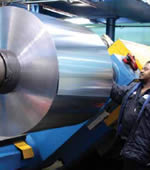
Hulett Aluminium grew operating profit by 32 percent to R422 million (2005: R319 million), with the Group’s share being 50 percent thereof. Sales revenue exceeded R5 billion for the first time. Sales volume growth continued and record annual rolled products sales of 183 000 tons (2005: 173 000 tons) were achieved. Local market sales of both extrusions and rolled products grew firmly, with increases of 15 percent and 11 percent respectively. Strong sales into the distributor, automotive and transport sectors were achieved. The higher LME price of aluminium continued throughout 2006, resulting in reductions in rolling margins while benefits accrued from the metal price lag effect on cost of sales. Manufacturing costs increased due to sharp rises in metal and energy costs, and from spot purchases of LP gas during the SAPREF supply disruptions, which also had a significant negative impact on volumes in 2006.
The Group’s operating profit includes the translation gain in respect of foreign cash of R57 million (2005: R14 million) as a result of the Rand weakening against the GB Pound. The offshore cash was utilised to facilitate Triangle’s acquisition of a 50,35 percent shareholding in Hippo Valley in Zimbabwe.
Net finance costs reduced from R60 million to R23 million. This was as a result of lower short-term borrowing and maize finance costs, combined with the effect of a finance structure at Hulett Aluminium maturing at the end of 2006.
The Group’s tax cost increased as operating profit increased. STC charges increased as a result of higher dividend payments.
The capital employed increased mainly as a result of higher working capital. This included growth in debtors with the higher invoicing levels at year end and higher aluminium stock values as a result of the higher LME price of aluminium.
The Group recorded a net cash outflow of R51 million before dividends and financing activities. This included the cash absorbed in working capital and the cash investment in the acquisition of Hippo Valley.
Net debt to equity has increased to 14,2 percent (2005: 6,7 percent).
The return on capital employed has grown from 11,1 percent in 2005 to 14,8 percent in 2006, driven predominantly by the growth in operating profit.
The Board has declared a final dividend of 350 cents per share, which brings the total annual dividend to 550 cents per share (2005: 400 cents per share).
Tongaat-Hulett extracts carbohydrates from sugar cane and maize and then produces a range of products from the refined carbohydrate. In a number of instances its operations offer similar products in key overlapping market sectors.
It produces, through its sugar and starch and glucose operations, almost half of the refined carbohydrates manufactured in South Africa. Tongaat-Hulett has established considerable expertise in adding value to agricultural products, an area requiring specific knowledge and skills. This provides a powerful base to harness its agri-processing abilities to expand activities into adding value to other agricultural crops.
As an agri-processor in Southern Africa, the significance to Tongaat-Hulett of agriculture and land is increasing rapidly, with the Mozambique sugar operations after expansion consisting of more than 45 000 hectares of land. Tongaat-Hulett is able to balance the operational requirement for cane supplies to its sugar operations with the transition to property development as urban and tourism demand increase. This value creation is currently capitalising on the urban and tourism growth on the KwaZulu-Natal coast north of Durban, with Moreland's established position as a leading land developer being a key success factor.
Agriculture and its associated processing industries are becoming increasingly more important in a global economy confronted by an expanding world population, a reduction in agricultural land as a result of urbanisation and climate change, concerns surrounding food security and the competition from biofuels for renewable resources. Tongaat-Hulett has the flexibility through each of its operations to manage these changing dynamics in order to extract maximum shareholder value.
Tongaat-Hulett Sugar is a world leader in sugar milling technology and continues to focus its energies on cane growing, sugar milling and refining at its operations throughout the Southern African region. It has four mills in South Africa, two mills in Mozambique, two in Zimbabwe and extensive cane operations in each of these countries as well as Swaziland. In addition to its raw sugar capability Tongaat-Hulett Sugar has a central refinery in South Africa with an annual refining capacity of some 600 000 tons. This refinery is complemented by additional refining capacity in Triangle Sugar and the capacity of the recently commissioned White Sugar Mill plant at Felixton.
Adverse growing conditions in 2006 resulted in total sugar production decreasing by 8 percent to 1,067 million tons. The total cane crush of 9,5 million tons in 2006 represents 72 percent of installed capacity compared to 76 percent in the 2005 year.
Sugar production in South Africa of 666 000 tons was 11,6 percent below the 753-000 tons produced in the prior year and well below the longer term average. Tongaat-Hulett Sugar’s technological leadership was confirmed during the year with sugar being produced on the new white sugar technology plant at Felixton and its continued out performance of industry benchmarks measured in terms of critical sugar recovery.
Good growing conditions in Swaziland resulted in Tambankulu Estates recording world class sucrose yields of 17 tons per hectare and the production of a raw sugar equivalent of approximately 55 000 tons (2005: 56 000 tons).
Triangle's sugar production increased to 240 000 tons, a 1,7 percent increase on the previous year despite the continued socio-political and economic difficulties of operating in Zimbabwe.
In Mozambique sugar production decreased to 106 000 tons (2005: 115 000 tons) with Xinavane increasing to 65 000 tons while Mafambisse decreased to 41 000 tons due to the drought conditions experienced over the growing season. The planting of new areas under cane in Mozambique and the maximisation of yields is progressing with the current capacity of 156 000 tons of sugar expected to be reached within the next two years, increasing with the approved expansions to 262 000 tons by 2009.
The matching of milling capacity to available cane supplies remains a key driver of low cost sugar production and plans are in place to increase cane supply to all mills.
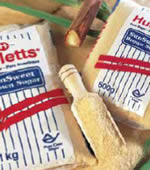
In 2006, the Huletts® brand was again voted by an independent survey as the second most admired food brand in South Africa, measured in terms of awareness as well as trust and confidence. The brand remains a cornerstone of Tongaat-Hulett Sugar's success and offers a total sweetener solution including a range of high intensity sweeteners.
Local market sales in South Africa of 469 000 tons decreased by 1 percent over the prior year with stock holdings at December 2006 decreasing by 3 percent to 151-000 tons. Progress continues to be made by sugar producers in Mozambique to secure the domestic market against illegal imports. The hyper-inflationary environment in Zimbabwe is being managed with frequent and substantial sugar price increases having to be implemented to protect operating margins.
Voermol Feeds, the molasses and bagasse-based animal feeds operation, continues to be a leader with its range of energy and supplementary feeds, amongst others, as the cornerstone of its offerings to the livestock farming community. Its contribution to Tongaat-Hulett's earnings in 2006 was similar to that of the previous year.
Export market prices in 2006 were approximately 37 percent above the prevailing prices in 2005 due to the increase in the world sugar price and a weaker exchange rate during the period. Export sales of 316 000 tons decreased by 18 percent over 2005 despite a reduction in stock on hand of 40 percent at the end of December to 76 000 tons due to lower production.
The world market price for sugar has been extremely volatile over the past year peaking at twenty year highs of almost 20 US cents per pound for a short period before declining to the current levels of approximately 11 US cents per pound. The world price continues to be underpinned by the reform of the EU sugar sector, higher international oil prices resulting in sugar being diverted to the production of fuel ethanol and generally high commodity prices supported by the continuation of global economic growth.
Tongaat-Hulett Sugar has over the past few years undertaken a number of management actions resulting in the establishment of leaner and flatter structures to improve its cost competitiveness. Technology management is a key element of Tongaat-Hulett Sugar's ‘lean’ manufacturing strategy and stimulates, supports and leverages the continuous improvement of its operations.
Global sugar fundamentals continue to improve as deregulation and pressures to reform mount. Tongaat-Hulett as a low cost producer with EBA access is well positioned to take advantage of these opportunities including the drive to renewable energy through biofuels/ethanol and electricity cogeneration. This together with the benefits of earnings enhancing actions and increased sugar production is expected to increase profits in 2007.
The imminent expansion of the Mozambique operations and the recent completion of the Muda dam near Mafambisse are indicative of Tongaat-Hulett being poised to capitalise on growth opportunities.
The recent acquisition of 50,35 percent of Hippo Valley Estates increases the ability to capitalise on the synergies with Triangle Sugar, particularly when the socio-political and economic environment in Zimbabwe improves.
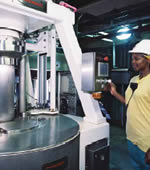

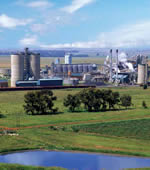
Tongaat-Hulett’s wet-milling operation, African Products, is the major producer of starch and glucose on the African continent. It was established in 1919 and has grown to be an important supplier to a wide range of South African and African industries. Operating five wet-milling plants, Tongaat-Hulett converts some 600 000 tons of maize per annum into starch and starch-based products. It manufactures a wide range of products, from unmodified corn starch to highly refined glucose products, which are key ingredients for local manufacturers of foodstuffs, beverages and a variety of industrial products. The strong growth of the South African economy is positive for good volume growth of these products.
African Products has continued with the back-to-back product and maize pricing model adopted in 2003. This model, while effectively eliminating the risk of maize price valuation adjustments, does not reduce the risk posed to margins by the movements in the South African maize price between import and export parity. Physical maize supply continues to be delinked from maize pricing.
Following a brief period in mid-2005 when South African maize traded at export parity, prices rose towards import parity at the end of 2005 and have remained at these high levels throughout 2006. This is largely due to the 43 percent reduction in the area of maize planted for the 2005/6 season, resulting in a reduction in maize production from 11,5 million tons in 2004/5, to 6,6 million tons in 2005/6. From September to the end of the year international maize prices have risen sharply, from levels around USD 90-100 per ton, to levels above USD 170 per ton, driven largely by increasing demand for maize to produce bio-ethanol. South African maize prices have tracked this increase, despite expectations of a larger crop for 2006/7. At the end of 2006, African Products has priced 35,1 percent of its maize requirements for the 2007 financial year.
African Products continued to hold its own against strong import competition, with local market volumes growing by 3,7 percent over 2005. Particularly strong performances were delivered by the confectionery sector, up 11 percent after a decline in 2005, following increases in world sugar prices and local import tariffs, and paper-making, up 23 percent, following the commissioning of new paper-making capacity in the South African industry. African Products continues to implement projects to grow the sales of higher value products. During 2006, specialised glucose sales grew by more than 13,5 percent, pre-gelatinised starch sales by 20 percent and sales to the adhesive markets grew by 98 percent.
For most of the year pricing remained under pressure from a relatively strong exchange rate and low international prices for starch and glucose. Average local market prices were slightly above 2005 levels. During the last quarter of the year, international prices have begun to rise, driven by increases in raw material prices. This trend will work its way through to South African starch and glucose prices during 2007.
The high price of South African maize, relative to international maize prices, rendered African Products uncompetitive in most international markets. Export volumes reduced by 50 percent and margins remained under pressure in those markets which it continued to service. The rising price trend and the closing of the gap between South African maize prices and international prices only occurred in late 2006, with little effect on exports for the year.
Costs in 2006 were dominated by the increase in maize costs, which amounted to a 10 percent increase in raw material costs compared to 2005. African Products has continued to optimise the remaining add-on costs, such as storage. The silo bag initiative was expanded from 27 000 tons in 2005, to 60 000 tons in 2006. This initiative will continue to be used to drive down maize carrying costs in 2007.
Overhead cost increases were contained to levels below inflation for the third consecutive year, as the benefits of the organisational restructuring process were achieved. The focus in 2007 will be on projects to improve efficiencies in the operations. class="nmt"
The most significant recent development in international markets has been the rapid rise in the world maize price as demand for maize to support large scale bio-ethanol production expansions, particularly in the United States, continues. This has resulted in significant input cost effects for the other major users of maize, including the starch industry. A number of the world’s major starch producers are large producers of ethanol and are benefiting from the expansion of the industry.
The opening of the Mexican market to the supply of High Fructose Corn Syrup from the United States has increased the capacity utilisation of the United States industry and is expected to lead to a tightening of supply of starch based products in world markets. China continues to add capacity, but strong local demand and increases in Chinese maize prices have limited export volumes from this market.
African Products has for the past few years had to respond to ongoing margin pressure brought about by rising local maize prices and ongoing price pressure from import competition whose raw material costs are significantly lower than in South Africa. World starch and glucose markets saw significant changes in the last quarter of 2006 with international prices increasing by over 30 percent in certain instances, driven by a 70 percent increase in world corn prices. The effect of these changes in world prices will allow Afprod to increase selling prices. However, maize price volatility due to uncertainty around the size of the South African 2006/7 season maize crop is likely to maintain the pressure on margins experienced in 2006.
Tongaat-Hulett’s property development arm, Moreland, together with its partners, has planned and developed approximately 1 500 hectares of land since 1990 at a cost of approximately R1,5 billion. This has facilitated the construction by its customers of more than 100 office and factory buildings, 5 000 residential units, Umhlanga Gateway and Crescent shopping centres, the Sibaya Casino and Entertainment World, four hotels, Umhlanga Hospital, Crawford and Umhlanga Colleges and places of worship serving a wide range of religions. This constitutes a total investment by Moreland's customers of more than R13 billion and has resulted in Moreland's territory being widely acknowledged as one of Southern Africa's leading property development and investment nodes. This has seen the creation of more than 50 000 much needed new jobs in both the construction and end-use industries and a boost to economic activity in the Greater Durban and KwaZulu-Natal North Coast Corridor.
This platform of prime property developments established over the past 15 years has enabled Tongaat-Hulett to further capitalise on the strong market conditions and development pace in the KwaZulu-Natal coastal corridor north of Durban.
Significant contributions were achieved across each of the commercial, industrial and resorts portfolios as Moreland continued to enhance its reputation as the leading land developer in KwaZulu-Natal and a leader in Southern African terms.
Demand for the mixed-use and new urbanism commercial development concept at the Umhlanga Ridge Town Centre has resulted in the first phase of the development being sold out with roll-on phases achieving good market response and the servicing of new phases being accelerated to address demand. An indication of the growing demand for space has been the increased sale of 145 000 square metres in 2006, including the
take-up of additional bulk on previously sold sites. The transfer of the site for the Marriott International 5-star Hotel and the launch of the Umhlanga Triangle –Ridgeside commercial precincts early in 2007 will cater for the ongoing demand for mixed-use and commercial developments, particularly in areas affording sea views.
The Zimbali Coastal Resort joint venture with IFA continued to perform well with a sell-out expected in 2007. IFA has released the plans for the 150-room Fairmont, 5-star hotel and good progress has been made with the planning of the Zimbali Lakes development incorporating a Gary Player designed golf course. The Zimbali joint venture has been expanded following the acquisition of land on the south bank of the Tongaat River.
The improvement in the local industrial market continued with demand for property at RiverHorse Valley Business Estate underpinning a strong sales performance with land for more than 82 000 square metres of bulk development being sold late in 2006. A final 310 000 square metres will be released to meet market demand and the development is expected to be sold out in 2007. Bridge City, another exciting public private partnership with the eThekwini Municipality, is to be launched to the market early in 2007 as a mixed use town centre development serving the KwaMashu area north-west of Durban.
The resolution of the government planning approval delays that hampered residential sales increased stock availability at the end of the year. The rezoning approvals of Izinga and Kindlewood in December, combined with an excellent market response to the launch of Izinga boosted the performance of the residential portfolio at the end of the period.


Market conditions remain positively influenced by a strong and stable economy, pent up demand, relatively low interest rates and exciting new developments in the greater Durban area, such as uShaka Marine World, Sibaya, Sun Coast, 2010 World Cup, the Dube Tradeport and King Shaka International Airport.
With approvals for key developments and increased stock levels in place, progress on government agreements regarding infrastructure investment to unlock economic growth and facilitate affordable housing and continuing strong market demand for its developments, Moreland is poised to continue on its growth path to unlock substantial value from Tongaat-Hulett’s land holdings.
Hulamin continues to carve out a unique niche among the major global producers for high value aluminium rolled and extruded products. Building on the loyalty of its growing customer base, Hulamin’s journey of improvement continues, in product mix, increasing capacity utilisation and cost controlling actions, to deliver improving financial performance. The approval in October of a R950 million project to increase capacity and grow volumes of high value products reinforces the growth path through to 2010 and beyond.
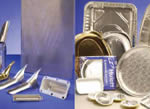
Hulamin is a leading, mid-stream aluminium semi-fabricator, purchasing primary aluminium and supplying manufacturers of finished products. Hulamin focuses on high specification, high value products such as thin gauge foils, can end stock, heat treated plate, clad alloys and complex extrusions. These products require high tolerance manufacturing processes and sophisticated technology. Hulamin is able to capitalise on its extensive technology base that has been developed over its sixty year history.
Market conditions were affected by a sharp rise in the LME Aluminium price in late 2005 which has continued into 2006 and has had a negative effect on rolling margins and profitability throughout the industry. In spite of the high LME price, global demand increased during the year, particularly in Europe and Asia. In South Africa, consumer spending and the acceleration of infrastructure investment resulted in record sales.
Industry consolidation and plant closures in the premium market sectors where Hulamin is active has reduced the number of competing suppliers with five major multinationals controlling over 70 percent of the world capacity. This trend continued with the announced closure late in 2006 of a European rolling mill, a major supplier of can end and tab stock.
Hulamin has consciously developed and implemented a sales mix optimisation model that continually seeks to shift production to higher margin and more technically demanding products. In these higher value markets, customer’s supply choice and market flexibility is limited by the influence of the major producers. This has resulted in increased customer loyalty for independent rolling mills, particularly those able to supply high specification, tight tolerance products. Consequently, demand for Hulamin’s products continues to exceed available capacity and Hulamin is well positioned to sell its full capacity in higher value products, respond to attractive market opportunities and to capitalise on many growth opportunities.
Hulamin continued in 2006 to grow its reputation as a responsive, customer focused, flexible quality supplier to selected markets. These markets offer good growth potential, and include can end and tab stock, clad products and brazing sheet, thin gauge foil and heat treated plate. In 2006, sales of clad and automotive products grew by 98 percent while exports of can end stock grew by 14 percent.
The R950 million expansion project announced in October 2006 represents a major step forward in improving the sales mix. Of the total capital amount, 58 percent will be spent on facilities providing further mix enhancement, most notably increasing volumes of heat treated plate and thin gauge foil. This latest project follows the first phase heat treated plate plant capacity expansion, announced in 2005 and successfully commissioned in 2006.
Hulamin has achieved significant growth in recent years, increasing rolled products sales volumes four-fold in the past six years and transforming itself from a regional producer into a respected global supplier. Exports have increased from less than 10 000 tons to over 130 000 tons across 350 customers on all continents.
During the current year Hulamin continued to improve the capacity utilisation in rolled products, growing volumes by 6 percent to 183 000 tons in 2006. Volume increases were achieved despite late ingot deliveries that spilled over from 2005 and a nationwide shortage of LP gas in the last quarter of 2006.
Local market sales remain a key driver of business performance, with growth of 15 percent and 11 percent being achieved in 2006 in the extrusions and rolled products markets respectively. Most sectors in the local market showed good growth, although the distributor and automotive markets were especially notable. Strong performance was also seen in the road transport, packaging and building products sectors during the year.
The volume increases were achieved on the back of ongoing improvements in all operations, particularly hot and cold rolling. The ingot supply shortage from BHP Billiton continued in the first quarter of 2006, resulting in lost production hours in the hot mill, a bottleneck process. Coupled with the shortage of LP gas, which caused major disruptions in the remelt, hot mill and coil coating operations, total production volume of some 5 000 tons of sales was lost in the year.
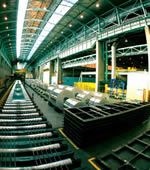
Capitalising on the benefits of the initial rolled products expansion 42 percent of the current R950 million expansion project will be spent on improving capability and increasing the plant capacity to 250 000 tons. This will be achieved through the purchase of twin-roll casters and capability improvements to the Edendale hot mill and S4 cold mill, as well as the benefit of two new foil mills. Benefits of the project are planned to come on stream in 2009.
Benefits from the commissioning of the expanded plate plant in the third quarter will be felt in 2007, while improvements in the production process of can end stock resulted in throughput rates improving by 22 percent ensuring sufficient capacity to cater for several years of growth.
The extrusion expansions are also progressing well. The expansion of the Midrand plant has enabled strong volume growth, while the commissioning of the powder coating plant in the fourth quarter is a major value prospect for 2007. In the Pietermaritzburg plant, the upgrade to the 3 800 ton press and the remelt was successfully completed for a major automotive contract.
Improved plant utilisation offset the major energy and metal related cost increases experienced during the year resulting in unchanged unit costs. The business continues to focus on containing costs in all areas. Significant improvements have been made in the area of metal recovery in the recycling process, while the first phase of energy consumption improvement in coil coating was successfully completed in the last quarter of 2006 and LP gas savings of 15 percent have been recorded. This will be followed by a second phase project in 2007 to reduce consumption by a further 50 percent.
Hulamin is a success story in the beneficiation of South Africa’s rich natural resources, contributing almost USD150 million per year in added value to the primary aluminium produced in the country. Even more noteworthy is that this beneficiation benefit is achieved in high value, difficult to produce products, where competition from dominant multi-nationals is intense. Hulamin has also contributed significantly to the growth in downstream manufacturing of aluminium products in South Africa, where consumption of its products has grown by more than 50 percent in the past three years.
Benefits are expected in 2007 from further volume growth, improved product mix and cost controlling actions. Specific actions include improvements to wide cold rolling speeds, continued focus on releasing hot rolling capacity, improvements to hard alloy casting throughput and recovery and the implementation of order acceptance and capacity planning software to further reduce inventory and improve on time delivery. Margins are also showing some improvement as customers adjust to the higher aluminium price levels.
Good progress continues to be made in the areas of workplace safety, health and environment with some significant achievements made in the year. The trend of improvement in safety performance continued in 2006, with a further decrease in the lost time injury frequency rate to 0,21, from 0,31 in 2005, 0,48 in 2004 and 1,27 in 2003. Regrettably, two fatal accidents occurred during the year, one in Tongaat-Hulett Sugar’s Xinavane mill, and one at Hulamin. The Group has a zero fatality target and the incidents were thoroughly investigated with action taken to prevent a recurrence of these types of incidents.
A comprehensive and holistic health programme underpinned by prevention, treatment, care and support is in place at all operations. One of the major challenges remains reducing the impact of HIV and AIDS. Employees are actively encouraged to participate in voluntary counseling and testing (VCT). During the year, 70 percent of employees in South Africa, 54 percent in Swaziland and 23 percent in Zimbabwe underwent VCT, with 390 employees receiving free anti-retroviral treatment, up from the 262 in 2005.
Tongaat-Hulett continues to make good progress in its environmental performance. The principles of ISO 14001 are widely applied, with specific targets being set to facilitate progress in key areas of environmental care and development. Ongoing progress is being made in
harnessing the potential of sugar cane as a source of environmentally sustainable energy generation, with new projects, both on electricity generation and biofuel production under investigation. The use of gas as opposed to coal as a source of cleaner energy has also advanced within the Groups’ operations.
Tongaat-Hulett is determined to realise value for all stakeholders by performing responsibly in relation to the physical and social environment and acting with the highest ethical and moral standards. The principles of sustainable development and good corporate governance and their integration into all aspects of Tongaat-Hulett’s business activities are described in more detail in the sustainability and governance reports included as part of this annual report.
The group has continued to make good progress on each of the legs of the broad based BEE scorecard. Clearly the major event in the current year has been the finalisation of plans around the introduction of value-added BEE equity participation into Tongaat-Hulett and Hulamin. This process is well advanced, with the selection of the broad based BEE equity partners in both companies having been announced in December. The selected partners have good credentials, with strong ties to the KwaZulu-Natal region.
Tongaat-Hulett values the new dimensions that a diverse human resource base brings to its businesses. A strong employment equity culture has been fostered over many years, and actions are continuing to improve the representation of designated groups, with particular emphasis on Africans, woman and people with disabilities. Currently, almost half of management, and 81,5 percent of skilled and supervisory positions are filled by black employees. Within the South African operations, 58,4 percent of the 562 graduates are black employees, with woman constituting 23,7 percent. Tongaat-Hulett’s focus on employment equity resulted in it being placed sixth in the Financial Mail 2006 BEE survey for employment equity.
BEE procurement is one of the key legs of the broad based BEE scorecard, as it is the mechanism through which benefits flow through the value-chain. The Group is putting plans in place to begin measuring its suppliers on the principles outlined in the DTI scorecard. Currently over 400 BEE suppliers supply Group operations, with a total spend of R919 million, which is an increase on the R867 million spent in 2005.
Programs are in place to encourage the development of small black owned business, including mentorship programs, and the sponsorship of training for emerging black maize farmers .
The unbundling and listing of Hulett Aluminium from the Tongaat-Hulett Group will provide direct access to two attractive investment vehicles, with clear information on their operations and prospects.
The unbundling enhances Tongaat-Hulett’s value proposition as an agri-processing business which includes integrated components of land management, property development and agriculture and creates opportunities to further enhance operating performance and improve delivery on growth projects already underway.
Key focus areas for the forthcoming year in Tongaat-Hulett will be the acceleration of the R1,3 billion Mozambique expansion and the unlocking of the synergies between the Hippo Valley and Triangle operations.
The value optimisation and management of its agricultural land holdings are central to the success of Tongaat-Hulett’s agri-processing activities. Tongaat-Hulett has developed the necessary portfolio of skills which allows it to manage the essential agricultural activities required to sustain its agri-processing businesses and to optimise the timing of decisions to develop agricultural land under pressure from tourism and urban expansion.
Hulett Aluminium provides investors with a unique investment opportunity in a focused aluminium semi-fabricator company in a market where the concentration of ownership in global manufacturers is resulting in an increasing commitment from customers to support independent rolling mills. Hulett Aluminium’s stature as a customer focused, reliable supplier will ensure it is well positioned for further growth.
The fundamental profit drivers remain in place in both Tongaat-Hulett and Hulamin. Profit from operations of both these entities is expected to grow in the year ahead.
It is appropriate for me at this point to pay tribute to the employees of the Tongaat-Hulett Group and to thank them for their continuing dedication and commitment. Working together we have established a competitive platform that will stand us in good stead into the future.
The support and advice that our team has received from the Chairman, Cedric Savage and the board is highly valued. The Tongaat-Hulett Group has benefited from their wise counsel and depth of experience over a number of years.

Peter Staude
Chief Executive Officer
Amanzimnyama
Tongaat, KwaZulu-Natal
16 February 2007