
The past three years have seen the businesses adapting to a stronger Rand. The benefits of the multiple management actions underway are increasingly reflected in the financial results. Operating profit, headline earnings, return on capital employed and dividends more than doubled in 2005.
An extensive strategic review to further enhance shareholder value, building on the achievements of the last two years and the ongoing actions to increase earnings in all operating companies, has been completed. This resulted in a board decision to embark on the unbundling of the Group’s 50 percent interest in Hulett Aluminium (Hulamin) to Tongaat-Hulett shareholders, the listing of Hulamin and the simultaneous introduction of BEE equity participation in both Tongaat-Hulett and Hulamin.
Tongaat-Hulett has made significant strides in the areas of employment equity, preferential procurement, skills development, enterprise development and community involvement. The unbundling will create the opportunity to attract value-add broad based BEE equity partners into Tongaat-Hulett and Hulamin.
The unbundling of Hulamin will increase Tongaat-Hulett’s focus on its core businesses, thereby creating further opportunities to enhance operating performance, increase benefits from the overlaps and synergies, improve delivery on growth opportunities, unlock value from its land holdings and take advantage of the changing global sugar dynamics.
Tongaat-Hulett has developed the Hulamin business over the past 30 years. The last 10 years have seen it being guided through the significant expansion of the rolled products business. It has undergone a major transformation into a successful independent niche aluminium rolled products and extrusion company. The business now has the requisite critical mass to prosper on a focused, stand-alone basis, with numerous growth opportunities.
The unbundling will provide direct access to two attractive investment vehicles, with clear information on these two entities and their prospects. Research on the JSE Securities Exchange has shown that unbundled companies tend to outperform their peers, everything else being equal, through enhanced operational performance, management accountability, capital allocation and a focused investment case. Earnings drivers and growth opportunities will be clearer and valuations will be better informed, attracting more investors.
Tongaat-Hulett generated revenue of R6,9 billion in 2005 (2004: R6,3 billion). Operating profit generated off this revenue increased by 104 percent in 2005 to R730 million (2004: R358 million). Each operating company’s performance is detailed in this report, in the sections that follow. Headline earnings of R466 million were recorded, an increase of 126 percent over the R206 million in 2004.
Operating profit includes valuation gains and losses on financial instruments, the major element of which was a R14 million gain in 2005 on foreign cash (2004: loss of R47 million). There is an ongoing process to reduce exposure to valuation adjustments.
Net financing costs have reduced, as a result of various factors, including lower interest rates, the African Products Kliprivier expansion funding structure having run to completion during 2004 and lower maize finance costs.
The tax charge includes the benefit of the one percent reduction in the South African corporate tax rate and the consequent R28 million release from the deferred tax provision in 2005.
Tongaat-Hulett’s return on capital employed in 2005 increased to 11,1 percent from 5,5 percent in 2004, which is in line with the doubling of profits.
The balance sheet at 31 December 2005 has remained substantially the same as at the end of 2004. Positive cash flow before dividends of R454 million was generated (2004: R93 million).
The board has declared an annual dividend of 400 cents per share for 2005 which is a 135 percent increase over the prior year (2004: 170 cents per share).
Tongaat-Hulett has converted to reporting under International Financial Reporting Standards (IFRS) for the year ended 31 December 2005. There are two main items to highlight. Triangle Sugar Zimbabwe continues to be accounted for on a dividend receipt basis, as the assessment of effective operational and financial control does not meet the criteria for consolidation in terms of IFRS. The charge to the income statement under IFRS for the year ended 31 December 2005 in respect of the share incentive schemes was R13 million after tax (2004: R8 million).


Tongaat-Hulett Sugar is well positioned for growth, benefiting from the execution of many earnings enhancing actions, a new world sugar regime and favourable global sugar fundamentals.

The deregulation of world sugar markets is presenting exciting growth opportunities for Tongaat-Hulett Sugar. The next few years will offer major opportunities for expansion of the company’s low cost production at a time when the EU is reforming its sugar market and when there is increasing pressure for fairer trade in agricultural products. These developments will underpin the world market sugar price. Further significant opportunities exist in the areas of electricity co-generation and the expansion of ethanol production as a bio-fuel.
Tongaat-Hulett Sugar’s earnings growth accelerated in 2005 with operating profit increasing by 183 percent to R232 million (2004: R82 million). In addition, a dividend of R19 million (2004: R51 million) was received from Triangle Sugar in Zimbabwe, which continues to operate profitably in a difficult environment.
Sales volumes in South Africa were 474 000 tons (2004: 464 000 tons) and raw sugar export volumes increased by 33 percent to 387 000 tons (2004: 292 000 tons). Increased production volumes contributed to lower costs per ton. This, together with improved sales volumes and higher export realisations, has increased margins. The 2005 results include an effective world sugar price of 8,98 US c/lb (2004: 7,27 US c/lb), which is well below the current price of around 17 US c/lb.
The benefits of actions taken to enhance earnings are increasingly being realised. These include rationalisation of milling capacity, reduction in milling costs, cane procurement projects, the new white sugar milling technology, head office closure, leveraging the Huletts® brand and other refining value chain initiatives.
Total sugar production in 2005 increased to 1,16 million tons, 7,3 percent up on 2004. The total cane crush of 9,9 million tons in 2005 represents 76 percent of installed capacity compared to 72 percent in the 2004 year.
Tongaat-Hulett’s sugar production in South Africa of 753 000 tons was four percent up on the 723 000 tons produced last year but still below the longer term average. In November 2005 the first sugar from the new white sugar technology plant was produced at Felixton. Tongaat-Hulett Sugar’s technological leadership again resulted in it outperforming the industry average measured in terms of critical sugar recovery benchmarks.
Good growing conditions in Swaziland resulted in Tambankulu Estates producing a record raw sugar equivalent of approximately 56 000 tons, compared to 50 000 tons in the 2004 season. The 17,3 tons sucrose per hectare harvested confirms the estate’s world-class status.
Triangle's sugar production increased to 236 000 tons, 6 percent up on the previous year despite the continued difficulties of operating in Zimbabwe.
In Mozambique the rehabilitation of the Mafambisse and Xinavane sugar estates continued in 2005 with sugar production increasing by 35 percent to 115 000 tons compared to 85 000 tons in the 2004 season following improvements in cane yields, cane quality and factory recoveries.
In terms of installed milling capacity, Tongaat-Hulett Sugar is capable of producing 1,5 million tons of sugar per annum compared to the 1,16 million tons produced in 2005. Plans are in place to continue to optimise capacity utilisation in South Africa. In Mozambique, the planting of new areas under cane and the maximisation of yields is progressing with the target capacity of 156 000 tons sugar expected within the next three years. Further expansion of the operations in Mozambique is being contemplated to take advantage of the country’s preferential exports into Europe from 2009 onwards when Least Developed Countries (LDC’s) will enjoy duty free access.
One of the foundations of Tongaat-Hulett Sugar's success remains the powerful Huletts® brand. In 2005 it was voted by an independent survey as the second most admired food brand in South Africa, measured in terms of loyalty and weighted by awareness as well as trust and confidence. The brand offers a total sweetener solution including a range of high intensity sweeteners.
In South Africa, local market sales at 474 000 tons show an increase of two percent over the prior year. Domestic stock holdings at December 2005 have decreased by 20 percent to 156 000 tons.
Progress continues to be made by sugar producers in Mozambique to secure the domestic market against illegal imports.
The hyper-inflationary environment in Zimbabwe is having to be managed with frequent and inflation-linked sugar price increases implemented to protect operating margins.
Voermol Feeds, the molasses and bagasse-based animal feeds operation, continues to be a leader with its range of energy and supplementary feeds, amongst others, as the cornerstone of its offerings to the livestock farming community. Its contribution to Tongaat-Hulett Sugar's earnings in 2005 was similar to that of the previous year.

Export market prices in Rand terms in 2005 were approximately 18 percent above those prevailing in the 2004 year due to the increase in the world sugar price. Export sales at 387 000 tons show a 33 percent increase over 2004 with export stocks on hand at the end of December 2005 decreasing by nine percent to 127 000 tons.
There has been upward pressure on the world market price for sugar which has risen over the past year. This has been underpinned by positive fundamentals including:
The EU is in the process of reforming its sugar sector so as to enhance its competitiveness, strengthen its negotiating position in the EU and to keep within its existing WTO commitments. The reforms will take effect from July 2006 and will remain in place until 2014/5.
These changes will result in the institutional price of sugar in the EU dropping by 36 percent over a four year period. The reform package will include restructuring assistance to beet producers and processors to encourage factory closures and the surrendering of quota as well as transitional aid to refiners. Although over time the prices enjoyed by ACP Sugar Protocol beneficiaries and LDC’s, in terms of the Everything-but-Arms initiative, will be lower than prevailing prices, the additional access afforded to LDC’s once duties are phased out in 2009 as well as an expectation of a higher international price following reform of the EU sugar sector will present opportunities for Tongaat-Hulett Sugar’s operations in the region.
New opportunities are presenting themselves to broaden product offerings after a period of research and development going back seven years. These include better utilisation of sugar cane’s constituent fibres and juice, with products such as crystalline and liquid fructose, high fructose cane syrup and a range of fermentation technologies.
Tongaat-Hulett Sugar has piloted the technology to produce high quality white sugar directly from raw cane juice, eliminating the need for refining. In November 2005, a plant using this technology was partially commissioned at the Felixton sugar mill. This is opening the way for major shifts in the approach to sugar milling and refining. Marketing initiatives are underway, with significant potential equity and royalty opportunities for Tongaat- Hulett Sugar.
Globally, sugar cane’s biomass is increasingly being acknowledged as a partial answer to greenhouse gas emissions and global warming. Many countries have already legislated for a renewable energy component in their national energy strategies and others are contemplating such a move, South Africa included. Electricity generation and fuel ethanol are two examples.
Tongaat-Hulett Sugar is increasingly seeing opportunities in environmentally sustainable energy generation from sugar cane. Recent developments include negotiations with Eskom and other third parties regarding the trading in renewable energy power and the expansion of ethanol production for use as a bio-fuel. These initiatives are certain to grow in significance given sugar cane's sustainable and renewable properties. A myriad of downstream and beneficiated products could become feasible with investment in new approaches and coordination of research. This has economic, environmental and social advantages for the development of cane as a natural resource.
The deregulation of international sugar markets provides the opportunity to further expand operations in Mozambique beyond 156 000 tons as sugar production moves away from high cost producing regions of the world. Xinavane is arguably one of the best placed sugar mills to benefit, with ideal irrigated growing conditions, high cane and sucrose yields as well as being close to an export harbour at Maputo.
The world market sugar price is currently trading at a higher level, propelled by positive sugar fundamentals contributing to a positive outlook for world sugar prices. This, together with the benefits of the earnings enhancing actions, is expected to increase profits considerably in 2006. The focus on renewable energy, both domestically and internationally, will offer Tongaat-Hulett Sugar opportunities going forward to better utilise the bio-mass of sugar cane.
African Products has continued its profit recovery and has re-organised itself to increase its competitiveness. High value product development remains a key component in the business strategy, with exciting developments currently underway.

Operating profit improved to R112 million (2004: R61 million) through an increase in domestic volumes and lower maize costs. These results have been achieved against significant import competition, low co-product prices and a volatile maize price.
An organisational restructuring was undertaken during the year, as part of the ongoing process to ensure operations are able to respond to the competitive environment, the benefits of which will be realised from 2006. Attention has been focused on advancing African Products’ skills profile.
The area of agri-processing provides numerous opportunities, with Tongaat-Hulett Sugar's and African Products' resources complementing each other. These opportunities include new products and applications from current agricultural raw materials, as well as from alternative raw materials. Using the current business base, there is the possible production of unique modified starches or syrups, pharmaceutical intermediates, bio-chemicals and ethanol. Other options include the processing of materials such as cassava, wheat, sorghum, guar and chicory for products and markets that range from depressants for the mining industry to animal feed formulations, inulin and prebiotics.
The new maize procurement and product pricing model is in operation. Maize is priced at the time when the product price is agreed with customers. There is no exposure to a priced maize position and therefore no risk of maize price valuation adjustments affecting profitability. Physical maize supply is delinked from maize pricing.
The South African maize market has experienced a year of uncertainty. The maize price, after reaching low levels early in 2005, rose strongly to levels close to import parity late in the year. The partial counter to a higher maize price arises through the simultaneous increase in co-product prices. The factors that caused this latest spike in the maize price include an overestimation by the market of the crop size, with a crop now estimated at 11,5 million tons, late rains and uncertainty by farmers over the area to be planted for the 2005/6 growing season. Continuing with its back-to-back pricing model, African Products has priced 33 percent of its maize requirements for 2006.
African Products’ efforts to recover market share against imported product were successful in 2005, after a decline in sales in 2004. Prime product sales in 2005 showed a growth of 3,9 percent above 2004 with one percent of this growth attributable to the recovery of business lost to imports, while the balance can be ascribed to underlying organic market growth and new business development initiatives. Going forward, positive volume growth is expected on the back of underlying organic growth, new business development projects and further initiatives to combat imports.
The ongoing strength of the Rand has resulted in sustained pressure from imports, particularly in respect of customers’ finished goods volumes. This was evident in the sale of glucose to the confectionery industry which showed a decline of 4,7 percent due to the continued growth in imports of confectionery products. African Products, with its installed capacity, is well placed to benefit from recoveries in those sectors fighting imports, together with tackling growth opportunities in other sectors.
African Products is seen as a producer of high quality products. In relative terms it is a large exporter, exporting about 12,5 percent of its production while the entire US wet-milling industry only exports approximately 4 percent of its prime product production.
Export volumes were 5,5 percent above 2004 although contributions continued to be suppressed by the strong currency and high freight charges.

The trend in China of significant increases in wet-milling capacity is continuing. This has resulted in increased capacity being available to export, although expectations are that this will be consumed by domestic consumption over the next few years. Export prices from China have increased throughout 2005 due mainly to increased freight rates and higher energy costs.
Prices for starch and glucose, especially those derived from cassava, increased during the year due to drought conditions in Thailand. Towards the end of 2005 however, these prices have reduced as more cassava root became available.
The trend of plant consolidation, especially in Europe and the US continues. African Products has been successful in continuing to fend off increasingly aggressive competition from foreign suppliers in 2005.
Cost management continues to receive attention. Significant improvements were achieved in the recovery efficiency at the two larger mills, with the Kliprivier mill improving its yields from 95,0 percent to 96,4 percent.
Major focus is being placed on reducing the cost of storing maize and ensuring the non-genetically modified status of maize. During the 2005/6 season 27 000 tons of maize has been stored in silo bags. The efficacy of this system will determine further initiatives in 2006/7. Plans to reduce maize storage costs will be expanded with a positive impact on landed maize costs.
African Products continues to pursue attractive opportunities to develop new products to add to its range of higher value products. Considerable success has been achieved in growing sales of mining depressants by 26 percent. With the initial sales of commercial quantities of starch-based adhesives progressing well, it is planned to expand sales in these product lines in 2006. Growth in adhesives in 2005 was 123 percent.
Full-scale agricultural trials of a starch-based hydropolymer product are currently underway, with results expected by mid-2006. This product is capable of absorbing up to 400 times its own weight in water and in a soil environment will re-release this water to the plant roots. It has applications in many aspects of agriculture, improving yields, nutrient availability to plants and reducing water consumption. It is particularly attractive in a water poor country such as South Africa.
Positive volume growth is expected on the back of underlying organic demand growth, together with further initiatives to combat imports. Plans to reduce maize storage costs will be expanded with a positive impact on landed maize costs. To a large extent, the overall outlook for African Products is dependent on the maize price level for the period from now until the end of 2006 and current maize prices will result in some margin pressure.
Moreland has continued to accelerate development of Tongaat-Hulett’s prime land holdings, capitalising on its property development platform in a favourable property market. Operating profit increased by 28 percent to R231 million (2004: R181 million).

With continuing keen interest in property, particularly on the KwaZulu-Natal north coast, Moreland has been able to achieve strong performances across its resort, residential, commercial and industrial portfolios. This is despite serviced stock levels being low due to delays in government planning approval processes.
A long awaited upturn in the industrial land market started in 2005 and all industrial sites in the Briardene and Mt Edgecombe Old Mill developments have now been sold. Sales were also achieved at the Canelands Industrial Park at La Mercy and Bridge City, which is situated between KwaMashu and the Phoenix Industrial Park. More than 40 hectares of platformed land at RiverHorse Valley Business Estate were sold during the year. The first phase of the project has been completed and the servicing of a further 30 hectares is being accelerated to meet market demand during 2006.
The mixed-use and new urbanism development concept at Umhlanga Ridge New Town Centre is being well received by the market and is achieving a good development balance. The first phase of the development has been sold out with more than 120 000 bulk square metres, including retail, offices and more than 1 000 apartments, under construction. Take-up of new phases and additional bulk on sold sites is increasing which is an indication of growing demand for space.
All sites in the La Lucia Ridge Office Estate have been sold and buildings have been substantially completed which represents development of some 180 000 square metres of prime office space, with minimal vacancies.
The residential portfolio posted record sales with the 100-unit La Lucia Ridge Executive Village site providing the major contribution. The first phase of the Izinga residential development was sold out. Several large sites at Ilala Ridge are under negotiation, which should see the sell-out of all developments in La Lucia during 2006.
The Zimbali Coastal Resort joint venture with IFA recorded another good performance with particular focus on sales of cluster unit sites. IFA finalised its acquisition of the site for its 150-room, international five-star Fairmont hotel with construction scheduled to commence in the latter half of 2006.

Key economic variables for property remain favourable. This should be underpinned by government’s commitment to drive economic growth via infrastructural investment, possibly including the King Shaka Airport and Dube Tradeport at La Mercy and in preparation for the 2010 Soccer World Cup.
A sustainable pipeline of developments is being fasttracked to sustain earnings and unlock value from Tongaat- Hulett's land holdings, which are under pressure from urban expansion. Further phases of existing developments should be approved in the first half of 2006.
Three major roads were opened within the last fifteen months, which have afforded greater access to, visibility and awareness of Moreland’s developments:
To address the general shortage of prime serviced industrial land in the greater Durban area, earthworks and servicing are being accelerated at RiverHorse Valley to bring additional serviced stock to the market early in 2006. New industrial developments are being planned at Cornubia and Shongweni. A limited number of high value office sites are to be launched at Umhlanga Triangle in 2006 to meet demand.
Substantial progress has been achieved in respect of planning and government approvals for new developments which will provide adequate stock across all portfolios for the foreseeable future.
Moreland continues to engage with local and provincial governments to provide for a balance of mixed-use and mixed-densities within future developments, whilst facilitating the release of land for affordable housing and ensuring government is providing more extensively for bulk infrastructure.
Opportunities to expand Moreland's business model downstream beyond land development are being explored. The investment in Afrisun KZN, bond facilitation and establishment of Zimbali Estates Agency have been the first steps taken in this process.
With anticipated approvals for key developments and increased serviced stocks, the imminent conclusion of four large transactions, coupled with the continuing favourable market conditions and government’s commitment to infrastructure investment to unlock economic growth, Moreland should achieve another good performance in 2006.
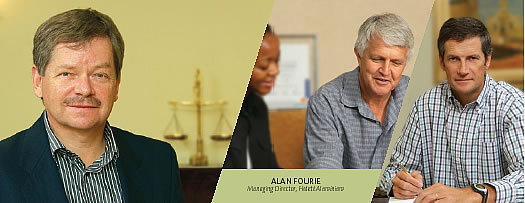
Hulamin is capitalising on its competitive position as a niche producer in an increasingly consolidated industry. The listing of Hulamin will be a further step in its transformation. The strategy of increasing earnings through significantly growing volumes, optimising the product mix and lowering unit costs continues, with the resultant enhanced return on capital employed. The progress made in 2005 is reflected in operating profit increasing by 113 percent to R319 million.

Hulett Aluminium is well positioned with market opportunities that are well in excess of available capacity. This allows optimisation in the allocation of available capacity to the most profitable market opportunities. Important contributing factors are competitive equipment capabilities, a well-developed technology base, sound relationships with customers demanding sophisticated products and a reputation as a responsive supplier. As an advantage over its larger competitors, Hulamin is able to maintain higher proportions of premium value products in its product mix without impacting on market prices.
Hulett Aluminium has developed a sales mix optimisation methodology to maximise earnings and continually seeks to produce higher margin and more technically demanding products. In many of these premium market sectors, industry consolidation has reduced the number of competing suppliers to a few major producers. The diversity and range of customers in these sectors creates numerous opportunities for Hulett Aluminium to establish mutually beneficial supply relationships with technically sophisticated and demanding end users.
Actions have been taken in recent years to grow the consumption of both extruded and rolled aluminium in the South African market. This has yielded solid growth in 2005, ranging from nine percent in extrusions to 19 percent in the rolled products markets. These increased volumes into the local market were achieved on the back of improved exports by local customers and sustained local economic growth. In the South African market, there are many applications where aluminium is replacing other materials such as wood, plastics, steel and other metals. Significant market growth was achieved in the road transport and automotive sectors, where aluminium is now widely used for dry bulk tankers, cargo vans, tippers and many specialised vehicles, as well as in automotive components such as radiators and condensers, where rolled aluminium has almost completely replaced copper.
Hulamin has increased its sales of more demanding, higher value products in international markets in 2005. Sales of Treadbright®, a mirror finish tread plate product grew by 27 percent, capitalising on the successful distribution channel that has been developed over the past twenty years. Sales of coated can end stock, used in the manufacture of beverage cans, increased by 33 percent. Further growth in can end stock sales is planned in 2006 and beyond, as improvements to coil coating facilities are completed and the accelerated qualification process with new customers in 2005 converts into profitable sales. Hulett Aluminium is well placed in this market to build on its established position as a top tier producer to develop high value, specialised products.
The business will continue with its initiatives to enhance its sales mix. A plate plant expansion, which will increase high margin heat-treated plate capacity by 50 percent, is progressing well and will come on stream in the second half of 2006.
Hulett Aluminium progressed well in growing volumes and improving capacity utilisation in its Rolled Products business in 2005. Sales volume growth of 20 percent to 173 000 tons was achieved on the back of continuing enhancements in the remelt facility and improvements in hot and cold mill performance. This was accomplished despite poor rolling ingot delivery performance from BHP Billiton throughout the second half of the year, when on-time arrivals averaged less than 50 percent. A further significant volume increase is expected in 2006 through optimising production at the Camps Drift hot mill and as a result of the confidence gained through exceeding the important threshold level of 180 000 tons annualised for several periods of 2005. Plans are in place to reach a production rate of over 200 000 tons during 2007 with the existing equipment.
Local market demand for extruded products has grown strongly in recent years. Hulett Hydro Extrusions again recorded strong volume growth in 2005. It has commenced a number of capacity expansion projects at the Midrand plant to maintain and grow its market share, including a new powder coating plant. There are good prospects for further growth with this enhanced capability.
The Hulamin plant is fully manned and the additional output that is being achieved arises primarily from improved utilisation of the installed capacity. Many of the manufacturing costs are therefore no longer sensitive to output. The combination of relatively static manufacturing costs, despite higher energy prices, and increased production has contributed to significant reduction in rolled product conversion costs per ton in recent years, with a further eight percent reduction being achieved in 2005.
A focused approach to address specific high impact cost improvement projects is also in place with a view to reducing the total manufacturing cost base. Significant cost reductions have in particular been achieved in the areas of melt loss and remelt gas consumption costs where improvements approaching 40 percent have been achieved over the last two years.

After the major capacity expansion in the late 1990’s, the current investment philosophy is to optimise existing capacity by improving the sales mix through increasingly high value products. This process is illustrated by the expansion of the plate facility which commenced in 2005.
Hulett Aluminium continued to produce plate at full capacity throughout the year and is well placed to capitalise on its reputation in this segment when the new capacity comes on stream in 2006. Within this phase of investment, feasibility studies for other projects to further enhance the product mix are well advanced.
As these projects reach maturity and Hulett Aluminium approaches an optimum sales mix, the focus will be extended to the next phase of growth. This will include the implementation of incremental volume growth projects that are becoming possible as a result of the business delivering the benefits from its initial major expansion.
The initial expansion generated 160 000 tons of additional capacity at a cost of some US dollar 3 000 per ton of capacity installed. This has resulted in a total plant capacity of 210 000 tons. The incremental capacity expansion opportunities that have been identified offer the opportunity to increase the total capacity to more than 250 000 tons with an incremental cost per ton of capacity in the order of US dollar 1 500 per ton.
Further opportunities for cost competitive expansion beyond the above levels have been identified.
The degree of consolidation in the industry is such that, subsequent to Alcan spinning off their rolling businesses into Novelis in 2004, three major multinational businesses control close to 70 percent of rolling capacity in the markets in which Hulett Aluminium competes. This concentration of ownership is resulting in an increasing commitment from customers to support independent rolling mills, such as Hulett Aluminium. As a result, the business continues to have a good forward order book and is well positioned for further growth.
Hulett Aluminium’s stature as a customer focused, reliable supplier continues to grow and demand for its products increased in 2005 in line with this improved customer confidence. As a result, Hulett Aluminium is in the position where demand for its products exceeds available capacity. This allows full capacity utilisation and the opportunity to select an optimum product mix, and to continue with Hulamin’s sales mix enhancement strategy.
Hulett Aluminium expects earnings to increase in the year ahead. Plans are in place to continue growing volumes in 2006, with particular initiatives in the areas of the Camps Drift hot mill, the coating line and the remelt facility. The business will continue to improve its sales mix with growth in the sales of can end stock, automotive products and plate and will continue to focus on costs. This will ensure that the reduction in conversion costs per ton achieved consistently in recent years is maintained.

Significant progress is being made in the areas of workplace safety, health and environment, with some notable achievements in 2005.
Substantial improvements have been achieved in safety performance over the past few years with a decrease in the lost time injury frequency rate to 0,31 in 2005, an improvement from 0,46 in 2004 and 1,27 in 2003. Regrettably, one work related fatality occurred in 2005. Tongaat-Hulett has a zero fatalities target and the incident was rigorously investigated and action taken to ensure that there should not be a recurrence of this type of incident.
A comprehensive and holistic health programme underpinned by prevention, treatment, care and support is in place at all operations. Effectively reducing the impact of HIV and AIDS remains a major challenge. Tongaat-Hulett actively encourages employees to participate in voluntary counselling and testing (VCT). During 2005, 49 percent of employees in South Africa, 32 percent in Swaziland and 14 percent in Zimbabwe have presented for VCT and 262 employees received free anti-retroviral treatment compared to 139 in 2004.
Tongaat-Hulett has continued to advance its environmental performance. It is pleasing to report that existing ISO 14001 compliant operations have retained their certification and a number of operations have achieved accreditation during the year. Specific targets are set in line with the ISO 14001 requirements which facilitate meaningful progress towards best practice in sustainable development. Progress has been made to capitalise on sugar cane's capability as a source of environmentally sustainable energy generation. Tongaat- Hulett Sugar mills continue to sell renewable electricity into the national grid and two mills sold electricity to a “green” electricity trader for the first time in 2005.
Tongaat-Hulett is committed to realising value for all stakeholders, performing responsibly in relation to the physical and social environment and acting with the highest ethical and moral standards. The principles of sustainable development and corporate governance and their integration into all aspects of its business activities is described in more detail in the Sustainability Report of this annual report.
Tongaat-Hulett has made significant strides in the areas of employment equity, preferential procurement, skills development, enterprise development and community involvement.
The proposed unbundling and listing of Hulamin will create the opportunity to simultaneously introduce substantial value-add BEE equity participation into Tongaat-Hulett and Hulamin. This process is currently in the detailed planning phase and one of the key factors will be to design a suitable structure for the transactions. The selection process and criteria for broad based BEE equity partners will take into account relevant stakeholders and the KwaZulu-Natal heritage of Tongaat-Hulett and Hulamin.
Tongaat-Hulett recognises that a diverse human resource base adds greater value in a transforming environment. A strong employment equity culture has been entrenched and action will continue to improve the representation of designated groups with particular focus on Africans, females and persons with disabilities. Action plans are in place to ensure that the comprehensive and challenging targets that have been set going forward will be met. Currently, almost half of management and nearly 80 percent of skilled and supervisory positions comprise black employees. Throughout the South African operations 55,4 percent of the 668 graduates and diplomates are black employees with women constituting 25 percent. In excess of 3 100 employees participated in training programmes during 2005 and 215 employees participated in Tongaat-Hulett’s study aid scheme which is aimed at assisting employees with part time tertiary education.
The objective of BEE procurement is to assist in the promotion of black businesses by ensuring that black suppliers have access to Tongaat-Hulett's supply chain and that procurement is consistent with government strategy on broad based black economic empowerment. Some 400 BEE enterprises supply Tongaat-Hulett and their BEE status is reviewed on an ongoing basis. The total BEE procurement spend for the year of R867 million represents 24 percent of total available spend, a significant increase on the previous year’s record spend of R564 million. A highlight of the year was the purchase of R211 million of sugar cane from historically disadvantaged individuals, representing about 22 percent of total South African cane procurement.

Tongaat-Hulett is growing earnings in its businesses, having adapted to a stronger Rand. Considerable earnings growth is expected in the year ahead. Earnings enhancing actions are underway throughout Tongaat-Hulett. The changing global sugar fundamentals and the higher world sugar price are positive developments. Continued growth is expected in aluminium rolled product volumes, together with sales mix optimisation and conversion cost per ton reductions. It is ideally placed to capitalise on its growth platform.
At the same time, Tongaat-Hulett is embarking on the process of unlocking further shareholder value through the unbundling and listing of Hulamin and the simultaneous introduction of BEE equity participation into the two substantial, focused and attractive listed entities. Significant preparatory work, including the relevant approvals and regulatory compliance, will be required to implement these initiatives.
The people of Tongaat-Hulett have been through three years of intense challenges and changes, emerging with pride. While it is appropriate at this time to pause and review our accomplishments, our efforts will continue as we grow earnings further and take advantage of the many opportunities that are emerging. I thank them all for their commitment and resolve. This experience will stand us in good stead as we look forward to the exciting journey ahead.
The support that our team has received from the Chairman, Cedric Savage and the board is highly valued. Tongaat- Hulett has benefited from their wise counsel and depth of experience during this past year.

Peter Staude
Chief Executive Officer
Amanzimnyama
Tongaat, KwaZulu-Natal
17 February 2006