| Tongaat-Hulett Sugar |
|||||||
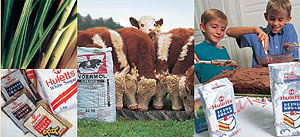
Arguably nature's most efficient source of carbohydrate, sugar cane is also a versatile raw material transcending conventional perceptions of its use. The foundation of Tongaat-Hulett Sugar's success remains the powerful Huletts® brand. In 2002 it was voted by independent survey the fifth most admired food brand in South Africa, measured in terms of awareness as well as trust and confidence. With spare milling capacity available and our core competencies in cane growing, sugar milling and refining, we will continue to grow in the internationally competitive region of Southern Africa. While world market prices can be expected to rise on production shortfalls induced by adverse climatic conditions, the long term solution to improving price levels generally lies in the elimination, under the auspices of the World Trade Organisation, of tariffs which afford protection to many high cost producers in the developed world. Tongaat-Hulett Sugar is increasingly seeing opportunities in environmentally sustainable energy generation from sugar cane. Eskom has an important role to play to ensure that there is an economic return on electricity sold into the national grid from renewable sources such as bagasse in order to incentivise profitable investment in the co-generation of electricity at our sugar mills. We continue to explore how we can expand ethanol production for use as a bio-fuel using cane juice or molasses - an initiative that is certain to grow in significance given sugar cane's sustainable and renewable properties. Having pioneered the production of bagasse and molasses-based animal
feeds under the Voermol brand, our animal feeds operation continues to
lead the pack with its range of energy supplements, amongst others, as the
cornerstone of its offerings to the livestock farming community. Operational Review
 the sugar brand of choice for a full range
of sweetener solutions." the sugar brand of choice for a full range
of sweetener solutions."
The results incorporate the adoption of AC 137 (Agriculture) which requires growing crops to be fair valued and the consequent move away from seasonal accounting. The overall effect of the change was a reduction in operating earnings in 2001 of R39 million and an increase of R32 million in 2002. Triangle Sugar, in Zimbabwe, which is accounted for to the extent that dividends are received, continues to operate resiliently in a difficult environment. In 2002 dividends received from Triangle totalled R71 million, net of withholding tax, representing a seven percent reduction on last year. Production Total sugar production in 2002 increased to 1,3 million tons, 16 percent up on 2001. The cane crush of 11 million tons in 2002 represents 84 percent of installed capacity compared to 75 percent in the 2001 year. Sugar production in South Africa of 860 000 tons, was 14 percent up on
the 756 000 tons produced last year. Although still down on the 969 000
tons sugar produced in the 2000 season, it represents a partial recovery
to normal production levels as a consequence of better growing conditions
and cane quality compared to the 2001 season.
In Swaziland, Tambankulu Estates produced the raw sugar equivalent of approximately 50 000 tons, compared to 43 000 tons in the 2001 season. Record sucrose yields as well as additional hectares under cane following the conversion of the citrus orchards to sugar cane were the major drivers behind this 16 percent improvement. Despite the socio-political and economic difficulties of operating in Zimbabwe, Triangle increased its sugar production to 296 000 tons, 12 percent up on the previous year, largely as a result of better growing conditions leading to improved cane quality and yields. In Mozambique the rehabilitation of the Mafambisse and Xinavane sugar estates continued in 2002 with sugar production almost doubling to 71 000 tons compared to 36 000 tons in the 2001 season. In terms of installed milling capacity, Tongaat-Hulett Sugar is capable of producing 1,5 million tons of sugar per annum compared to the 1,3 million tons produced in 2002. Export Markets Export market prices in Rand terms in 2002 were approximately eight percent above those prevailing in the 2001 year. Refined sugar exports have assisted in improving realisations with the white premium trading at acceptable levels throughout the period under review. Mozambique, a Least Developed Country, has access to the European Union under the "Everything-but-Arms" initiative and in the case of sugar, this access will be phased in over a seven-year period. Domestic Markets The domestic markets of Mozambique, Zimbabwe and the South African Customs Union have been characterised by opportunities and challenges. Tongaat-Hulett Sugar's brands performed well in 2002 with Huletts® being voted by an independent survey South Africa's fifth most admired food brand measured in terms of awareness as well as trust and confidence. Good progress has been made by sugar producers in Mozambique to secure the domestic market against imports. Year-on-year sales by domestic producers grew 77 percent, with the second half achieving sales growth of 112 percent compared to the previous year. Statutory price control remains the over-riding feature of the market in Zimbabwe, squeezing both cane growing and sugar milling margins. The sugar industry in Zimbabwe continues, with some success, to make representation to the government for increases in controlled prices. The Department of Trade and Industry is reviewing the South African sugar industry's regulatory framework following a notice to this effect in the Government Gazette on 12 January 2001. The review will be undertaken within the accepted framework of the government's strategies for the sugar sector in the South African Customs Union and the Southern African Development Community, and will be undertaken in consultation with the industry. Changes are not expected before the 2004/5 season. Animal Feeds Tongaat-Hulett Sugar's molasses and bagasse-based animal feeds operation, Voermol Feeds, experienced significantly improved trading conditions. Its contribution to Tongaat-Hulett Sugar's earnings in 2002 was well up on the previous year. Outlook The size of the crop in the non-irrigated areas will depend on good rains in the rest of the summer growing season. International prices are holding firm above 6 US cents per pound although US dollar weakness is of concern for export realisations in Rand terms in 2003. The economic environment in Zimbabwe remains volatile and is
characterised by a loss of skills, hyperinflation, an over- valued
currency, foreign exchange shortages and statutory price controls.
Difficult trading conditions are likely to persist in 2003. Concerns exist
over the future remitability of dividends from Zimbabwe. |